
Demystifying the world of Commodities: (Day 1/90)
#CommodityCrush

Have you ever wondered about the journey of the coffee beans in your morning brew, or how the price of gasoline at your local station is determined? Welcome to this fascinating world of commodities! For the next 90 days, I will walk you through the basics of commodity markets and help you understand the top commodities that are traded on the exchanges and their importance in our daily lives and the global economy.
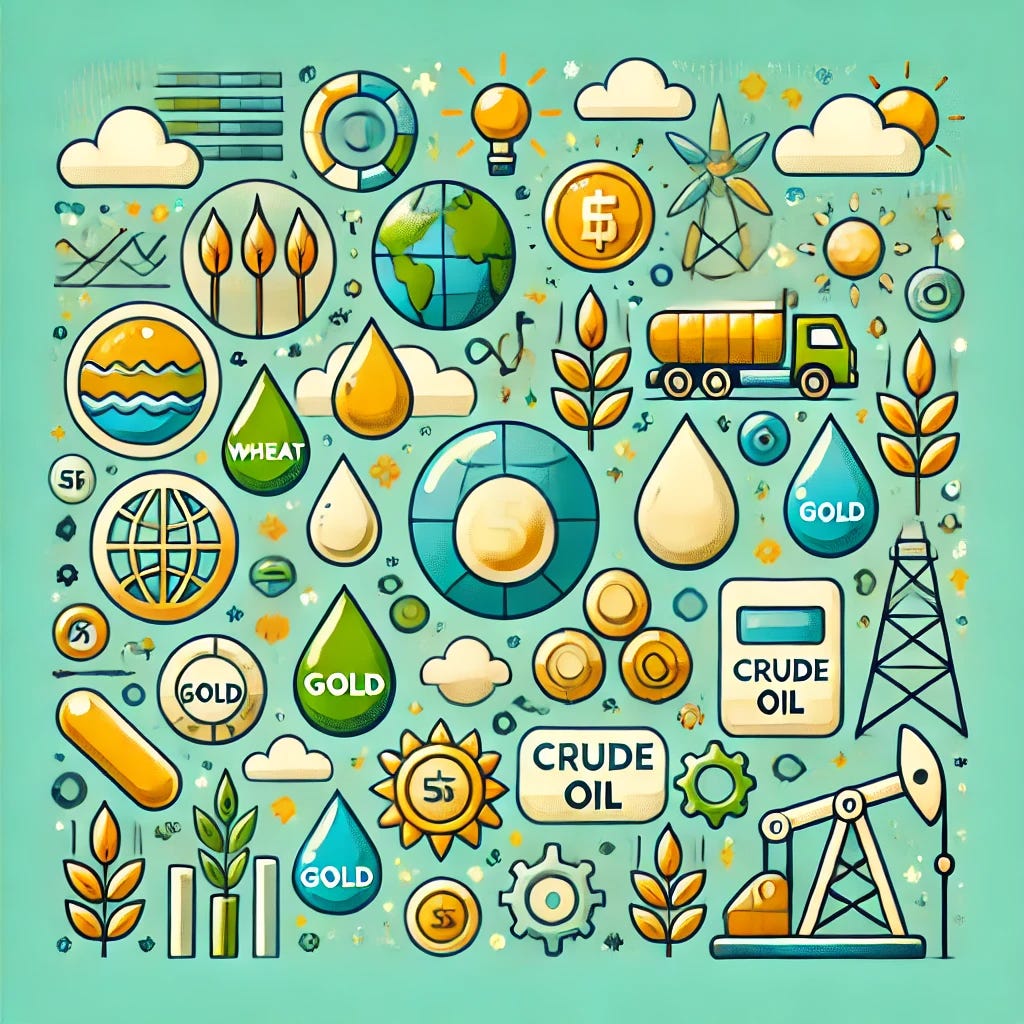
So, to begin with, what exactly are Commodities?
Commodities are raw materials or agricultural products that can be bought, sold, or traded. They're the building blocks of our economy, used to create the products we use every day. Commodities are generally uniform in quality and interchangeable with goods of the same type, regardless of who produces them.
Most commodities are raw materials, basic resources, agricultural, or mining products, such as iron ore, sugar, or grains like rice and wheat. Popular commodities include Crude Oil, Gold, Silver, and Natural Gas.
What are the different types of Commodities? They are typically grouped into the following categories:
1. Agricultural: These include Wheat, Corn, Soybeans, Sugar, Chana, Barley, Guar Gum, etc.
2. Energy: This category covers Crude Oil, Natural Gas, Coal, and even renewable energy sources like Natural Gas.
3. Metals: Both precious metals (like gold and silver) and industrial metals (like copper and aluminium) fall into this group.
🔹How Do Commodity Markets Work?
Commodity markets operate on the basic principle of supply and demand. When supply is low or demand is high, prices typically rise. Conversely, when supply is high or demand is low, prices tend to fall.
These markets involve various participants:
- Producers: Farmers, mining companies, and energy firms that produce the commodities.
- Consumers: Companies that use commodities to create products (e.g., a jewelry maker buying gold).
- Investors and Speculators: Individuals or firms that trade commodities for profit.
🔹Why Should Beginners Care About Commodities?
Understanding commodities can help you:
1. Make more informed investment decisions
2. Get a whole picture of the global economic trends.
3. Recognize how world events might affect your daily life (like the price of your morning coffee)
🔹Getting Started with Commodity Investing:
For beginners, direct trading in commodities can be complex and risky. However, there are more accessible ways to get involved:
1. Commodity ETFs: These funds track the performance of specific commodities or commodity indexes. E.g.: Gold and Silver ETFs are listed on the exchanges.
2. Stocks of Commodity Companies: Investing in companies that produce commodities can be a way to indirectly invest in the commodity market.
Commodities play a vital role in our global economy and daily lives. While the commodity market can be complex, understanding its basics can provide valuable insights into economic trends and potential investment opportunities. As you continue your financial journey, keep an eye on the world of commodities – you might be surprised at how often they impact your daily life!
Remember, all investments carry risk, and it's crucial to do thorough research or consult with a financial advisor before making investment decisions.